

Elbow pain
Do you have elbow pain?
Read below for information about elbow pain
Elbow pain is commonly caused by overuse and resolves by itself with time.
Carrying out simple exercises or by adapting your movements, using splints, applying ice or heat packs can help to ease pain and improve movements.
It is important to see your GP if:
- your elbow is hot, red and swollen, as this may be a sign of infection
- your elbow pain came on following a fall or trauma or you think you have broken your elbow
- you have tingling or numbness further down your arm or in your hand
How elbows work
Read below for information about how elbows work
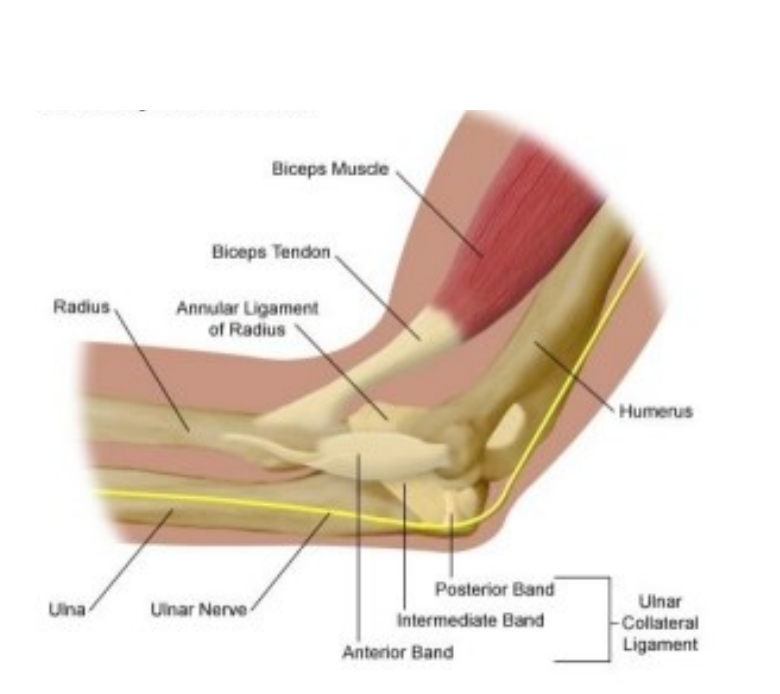
Elbow pain is often caused by using your elbow too much. It usually gets better over time. The elbow is a hinge joint. The movements that happen at the elbow are:
- straightening also known as extension
- bending also known as flexion
- rotating
There are 19 other muscles in the forearm. They attach around the elbow and go into the wrist and hand. As these muscles are attached to the elbow, they can be involved in causing the pain at the elbow.
Common causes of elbow pain
Read advice on the common causes of elbow pain
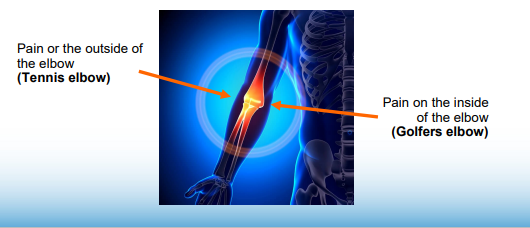
Pain either inside or outside of the elbow is usually caused by a repetitive strain tendon injury or overuse. This is most commonly known as golfer's or tennis elbow (you don’t have to be a tennis player/ golfer to get these). Other common causes of elbow pain can be a fracture, joint instability, arthritis, bursitis or a nerve-related pain.
How much exercise should I do?
Exercise every other day
Allowing enough rest is important to let soft tissues recover and develop.
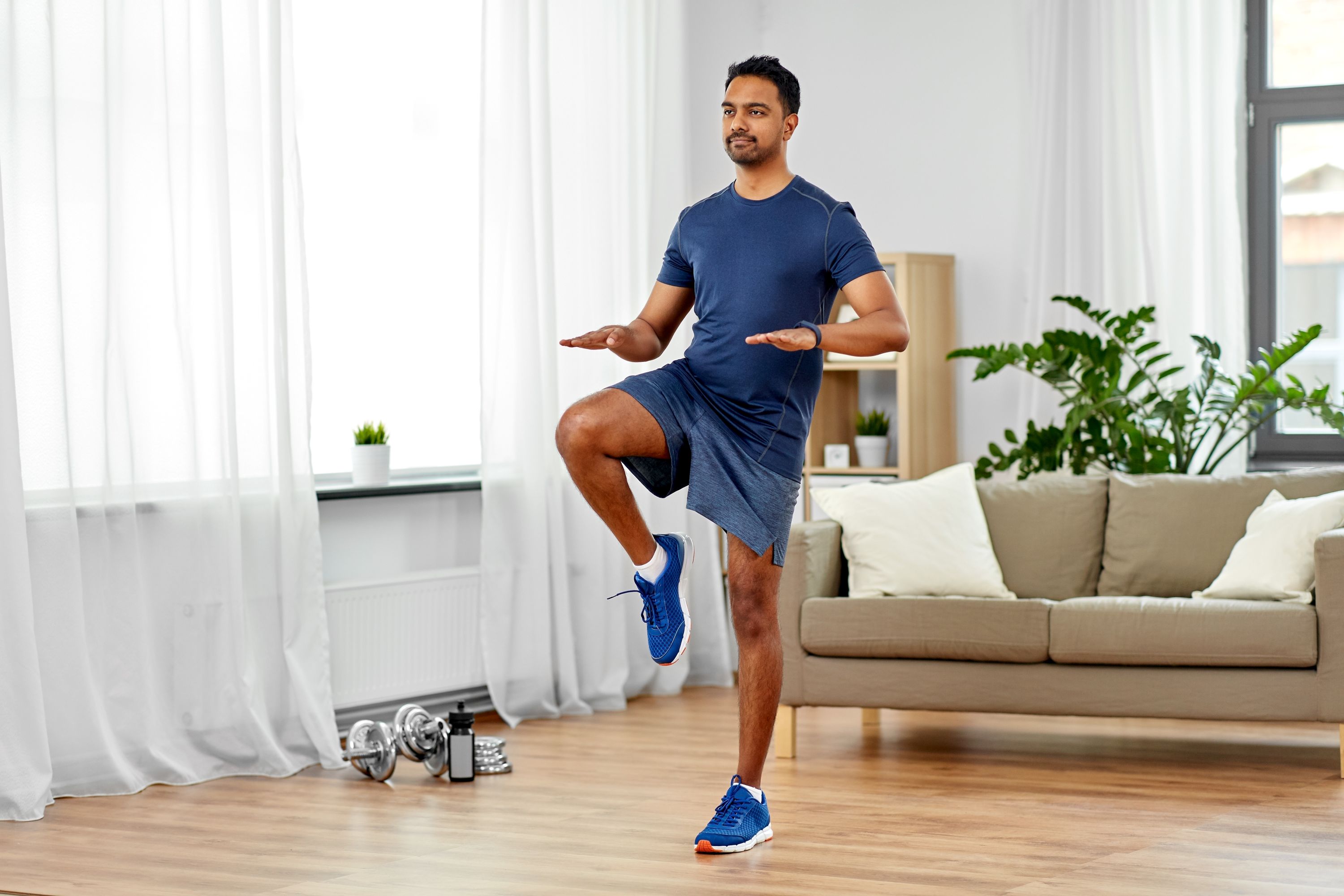
Choose 3 or 4 exercises
Choose exercises that are challenging but manageable.
Repeat the exercise
Perform 3 to 5 sets of 5 repetitions for each exercise.

Rest
Rest for up to 1 to 2 minutes between each set.
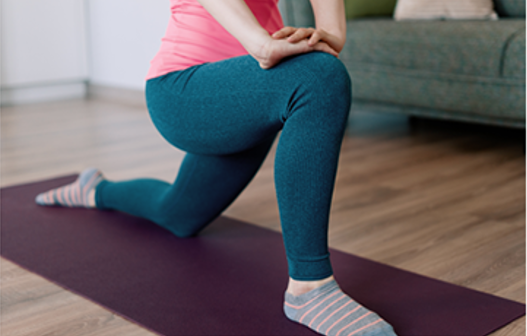
Once an exercise is easy, progress it
Increase the number of repetitions (aim for 10), hold the positions for longer or move to a more challenging exercise.

How much pain is too much pain?
Read below for advice and exercises to manage knee pain.
Before exercising
Before exercising, rate your pain at the moment on a scale of 0-10, where 0 is no pain and 10 is the worst pain you can imagine.
A maximum pain level
A maximum pain level of 4/10 whilst exercising is fine as long as it eases within 45 minutes of the session and does not interfere with sleep or activities the next day.
If your pain increases
If your pain increases beyond this, simplify the exercise by reducing the range of movement or number of repetitions, or try an easier exercise.
Exercises
Range of movement and stretching exercises
Read about seated (desk-based) exercises to improve elbow pain symptoms.
If your elbow has lost movement because of pain or stiffness, it needs to be regained. In order to strengthen the elbow effectively, complete these exercises little by little and often.
How to do a forearm flexor stretch:
- Place your hands flat on a table. Your hands and fingers should be facing towards your body. Your wrists should face away from your body.
- Straighten your arm and hold this position for 20 seconds.
How to do an elbow flexion and extension:
- Start with both arms hanging by your side.
- Slowly bring one arm up to touch your shoulder. Keep your arm straight. Only move your forearm.
- Hold for 3 seconds.
- Slowly lower your arm.
This is one repetition of this exercise.
Find a video of the elbow flexion
Strengthening exercises
Read about strengthening exercises to improve elbow pain symptoms.
These exercises will help build and strengthen your muscles.
You will need a weight to do these exercises. If you do not have a dumbbell, you can use a:
- water bottle filled with water
- tinned can of food like chopped tomatoes or apricot slices
- bag
Make sure the weight is manageable. The exercise should be challenging but it should not make your pain worse. This will be different for everybody.
How to do an elbow concentric wrist flexion:
- Start with your hand over the edge of a table. Hold the weight in your palm. Your palm should be facing up.
- Slowly lift the weight upward towards you. If you are struggling to lift the weight, you can use your other hand to help lift up the weight.
- If using your other hand to assist, let go.
- Slowly lower the weight back down as far as you can tolerate.
Forearm supination pronation
How to do 1 repetition of forearm supination pronation:
- Start with your hand over the edge of a table. Your hand should be in a "thumbs up" position. Hold the bottom of the weight in your hand.
- Slowly turn your hand outwards and away from you. Your palm should be facing up. Only your forearm and hand should move.
- Bring the weight back up to the starting position. You can use your other hand to help you.
How to do an elbow eccentric strengthening exercise:
- Support your forearm on a table with your palm facing down. Hold a weight.
- Bend your wrist up assisting the movement with your other hand.
- Slowly lower your hand down without assistance from the other hand.
Exercises for golfers elbow
Learn exercises to improve golfers elbow.
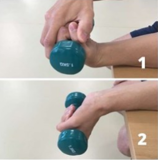
Exercise 1
Start with your hand over the edge of a table with your palm facing up.
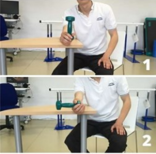
Slowly lift the weight upwards, using your other hand to assist this movement as shown.
Then with the affected hand, slowly lower the weight back down as far as you can tolerate.
Exercise 2
Start with your affected side hand over the edge of a table with your thumb facing up.
Grip the bottom end of a weighted object in the affected side.
Slowly lower the weight outwards so the palm faces up. Then using your other hand assist the weight back to the start position.
Exercises for tennis elbow
Learn exercises to improve tennis elbow.
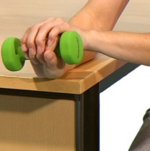
Exercise 1
Support your forearm on a table with your palm facing down. Hold the weight.
Bend your wrist up assisting the movement with your other hand. Slowly lower your hand down without assistance from the other hand.
Exercise 2
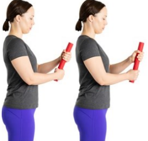
Start by standing, with your arms by your sides and elbows at a right angle. Hold a Flexbar with both hands, or alternatively, something like a teatowel would work well.
Straighten your wrists and twist the Flexbar/tea towel outwards with both hands. Return to the starting position.
Note, the resistance increases when you bring your hands closer together.
Exercises for elbow tendon pain
Find exercises to improve elbow tendon pain.
Exercise 1
Forearm supported on a table, elbow as straight as possible, palm facing downwards, hand relaxed over the edge.
Lift your hand up as high as possible, with your forearm not lifting from the table. From this position, slowly allow your hand to drop down while counting to 30, then return to the starting position.
Repeat 15 times x 3 sets.
Progression: add a light weight as pain allows.
Exercise 2
With your bad wrist extended back. Put the other hand over the back of the hand to be exercised. Try to push the back of the hand further back while preventing movement with your other hand.
Apply as much force as is tolerated without pain. Hold for approximately 45 seconds. Repeat 6 times.
Exercise 3
Stand. With your elbow straight, make a fist with your affected hand. With your other hand, passively flex the wrist until you feel a stretch around the forearm and elbow.
Hold for 30 to 60 seconds. Repeat 3 times, with a 30 second rest between each repetition.
Top tips
Read some tips about how to manage elbow pain.
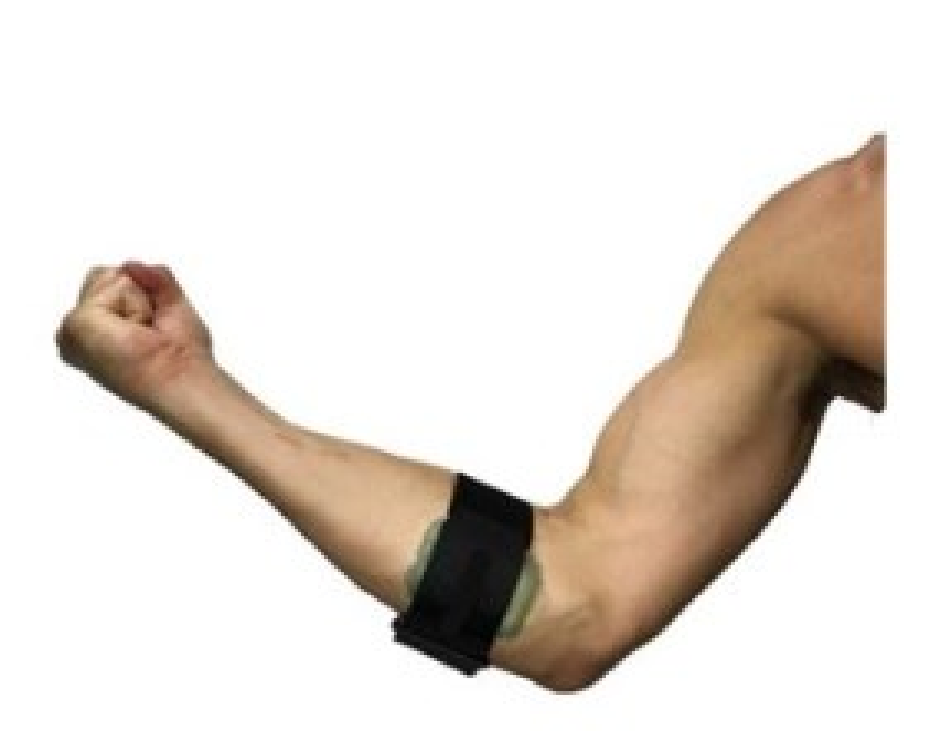
Elbow band
Elbow bands can be helpful for reducing pain. This may also be known as a golfer's elbow band or a tennis elbow band.
You can buy this in a pharmacy or online.
Place the elbow band 1 inch below your elbow crease. The padded or thicker section should be placed on the painful side of your elbow.
Elbow bands should only be worn for short periods of time. Try to only use them for activities you find difficult.
Flare up management
It is not unusual to have a few flare-ups along the way during your recovery. If this happens, don't panic, as it's very unlikely you will have
done any lasting damage. You may need to scale back the exercises a bit and then gradually build up again. It may be that you overdid an activity, so reflecting on what might have flared it up and trying to find a way to avoid or modify that particular activity until things settle more would be a good idea.
Managing your pain
Pain relief is not simply there to mask a pain; one of its main uses in Physiotherapy is to encourage more normal movement and activity, which will help sensitive structures to settle down and strengthen.
Pain relief can take time to take effect, so please be patient if you’re not getting instant relief. It is always advisable if you are unsure or you are thinking about taking a new medication to speak to your pharmacist or GP first.
Find information about pain relief
When to seek further support
If your symptoms have not resolved in 6 to 12 weeks, in spite of regular exercises, modifying your activities and trialling a support and pain management, then please speak to your GP or if you haven’t already you can self refer to physiotherapy.
If your symptoms are worsening, or if you are noticing changes to the appearance of your elbow then we suggest you get in touch with your GP.
Need more help?
Consider self referring using the link below:
If you have a new injury or problem, please look at the self help information in our advice pages. We will often complete the same exercises and share information in clinic appointments.
If you still need some more help you can self refer into our service. Please note that the NHS is currently experiencing longer than normal waits, for more information visit our waiting times page.