


Do you have foot or ankle pain?
Read information about the causes of foot and ankle pain.
This could be caused by an injury, like a sprain, by wearing inappropriate/ill-fitting shoes or by a medical condition, such as age-related joint changes (osteoarthritis), plantar fasciitis, or tendonitis.
Because we use our feet and ankles every day to get around, when they are painful, it can be quite unbearable.
It is important to see your GP if:
- your ankle pain came on following a fall or trauma
- you are unable to put weight on your foot or ankle, making it difficult to walk
- your ankle is hot, red and swollen as which may be a sign of infection
- you have swollen or stiff feet
- you experience burning pain or numbness
- you are diabetic
The good news is that you can ease most foot or ankle pain with simple things yourself. We have shared some of our top tips for alleviating the pain and exercises to strengthen and stretch the joint.
For health professionals: Please note referrals for hammer toes, hallux valgus, hallux regidus, plantar faciitis or mortons neuroma need to be send to CPFT community podiatry service.
How to help ankle pain
This guidance has been produced by the DynamicHealth physiotherapy service. It offers simple measures to help you manage your ankle problem safely; often the right advice and exercises are all you need to improve the problem. This leaflet has been made available to your GP, who may ask you to try the advice and exercises prior to consulting a physiotherapist.
If your ankle pain started after recent trauma, please seek medical advice before reading further.
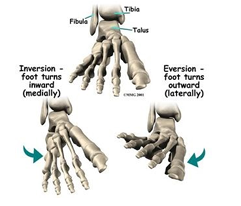
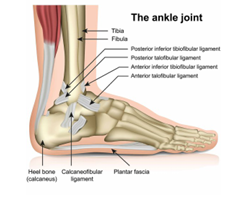 ankle joint is primarily formed by three bones the tibia and fibula of the leg and talus from the foot. This is described as a synovial hinge joint which allows you to point your foot, as well as bringing the foot and toes up towards the shin (otherwise describe as plantarflexion and dorsiflexion). Other key movements are turning your foot in and outwards (otherwise known as inversion and eversion).
  ankle joint is bound together by strong tibiofibular ligaments (the deltoid ligament, anterior and posterior talofibular ligaments and the calcaneofibular ligament), which help to stabilise the joint. The ankle is further supported by muscles that pass over and around the joint.
 How much exercise should I do?
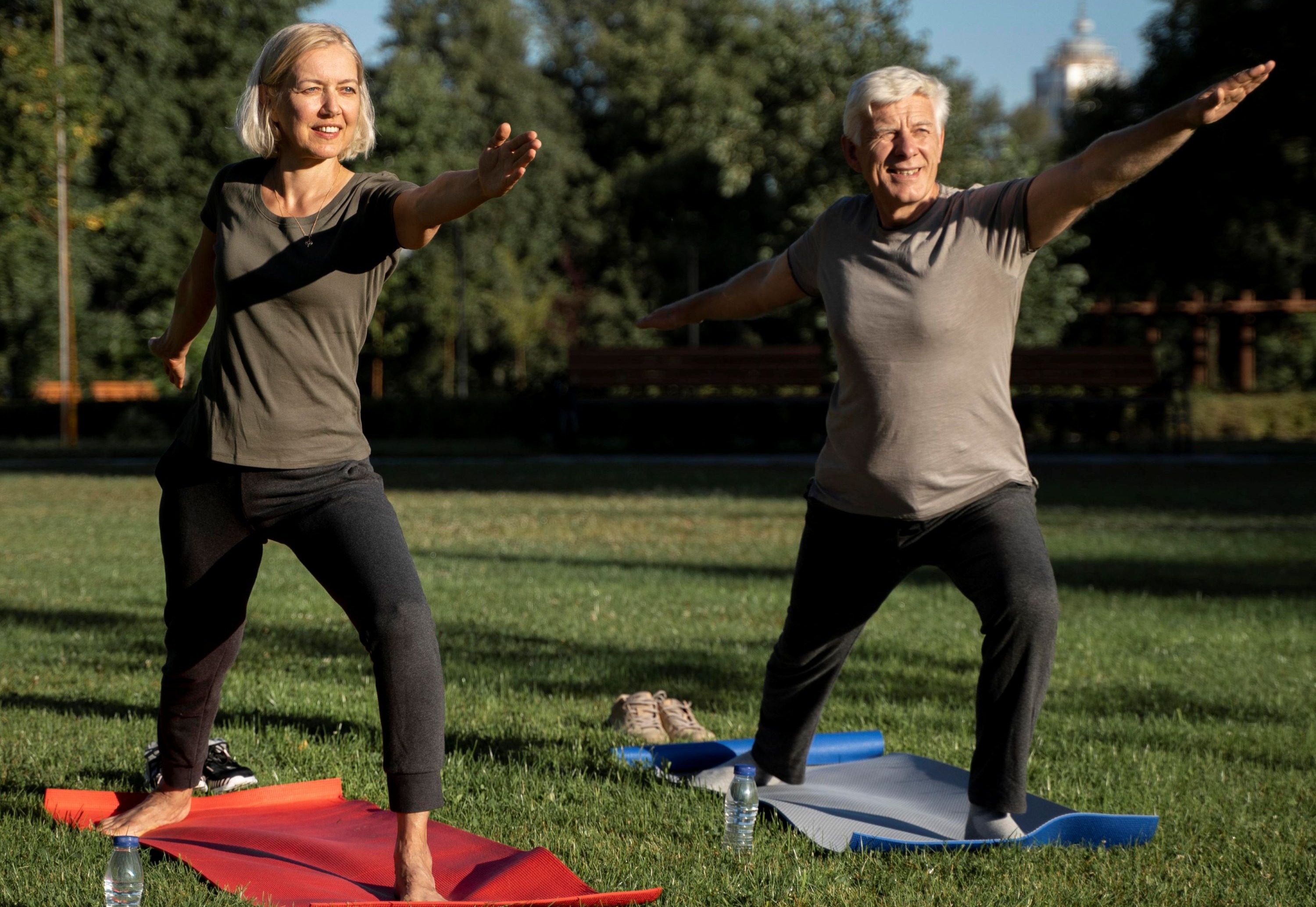
Exercise every other day
Allowing enough rest is important to let soft tissues recover and develop.

Choose 3 or 4 exercises
Choose exercises that are challenging but manageable.

Repeat the exercise
Perform 3 to 5 sets of 5 repetitions for each exercise.

Rest
Rest for up to 1 to 2 minutes between each set.

Once an exercise is easy, progress it
Increase the number of repetitions (aim for 10), hold the positions for longer or move to a more challenging exercise.

Beginner exercises
Find information on which exercises can support ankle pain.
 itting or lying.
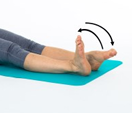 on your back with your legs straight.
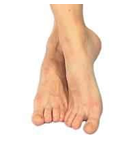 on a chair or on the floor. Cross your feet and put the outer edges of your little toes together.
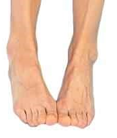 on a chair or on the floor. Put the inner borders of your big toes together.
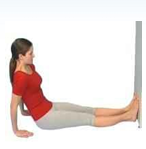 with your legs stretched out in front of you, with your arms supporting you. Feet resting against a wall.
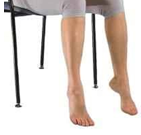 on a chair.
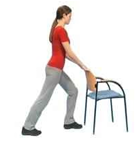 with the leg to be stretched straight behind you and the other leg bent in front of you. Take support from a wall or chair.
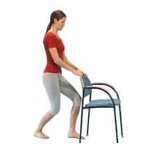 in a walking position with the leg to be stretched behind you. Hold on to a support.
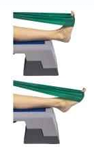 with your leg straight and the loop of an exercise band around your foot. Hold both ends and take the slack off the band.
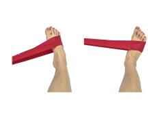 an exercise band firmly to the side. Take the loop of the band around your forefoot.
 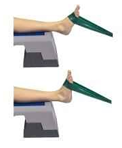 with your leg straight and the loop of an exercise band around your foot. Attach a band firmly in front of you with the slack taken off.
Advanced exercises
Find more advanced exercises to work up to which support ankle pain.
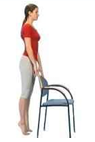
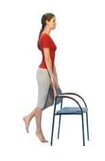 on one leg.
 by standing on one leg.
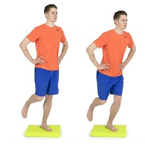 on one leg on a balance pad.
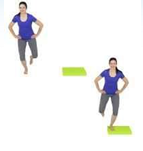 tall next to a balance pad. Make sure that the pad doesn't slide.