
Greater trochanteric pain syndrome
Understanding greater trochanteric pain syndrome
Pain on the outside bony part of your thigh could indicate a soft tissue problem and is known as greater trochanteric pain syndrome (GTPS).
GTPS describes pain at the side of the hip, often felt on side-lying or when climbing stairs, which originates in the soft-tissues of the hip including muscles, tendons and bursa. A bursa is a small fluid-filled sac that allows tendons to glide over bone.
In the majority of cases, pain is usually a consequence of overloading the gluteus medius and/or gluteus minimus muscles and/or compression of their tendons in certain postures. It can occasionally be accompanied by an inflamed bursa (a bursitis). Tendons can be overloaded either with a significant change in physical activity (type or volume) or most commonly with a loss of strength in these muscles.
How is GTPS managed?
Exercises that target the strengthening of these muscles, together with avoiding stretches and provocative postures (in standing, lying or sitting) that place the tendons under compression have proven effective in improving symptoms within 8 to 10 weeks.
Postural advice
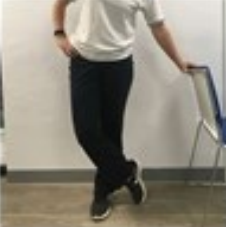
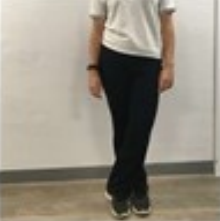
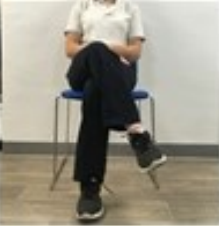
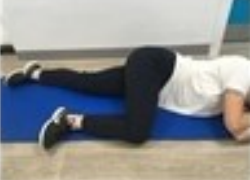
Avoid any position that allows your affected leg to cross the centre-line of your body. For example, do not sit with crossed-legs or stand with crossed ankles. If you prefer to sleep on your side, place a pillow between your knees.
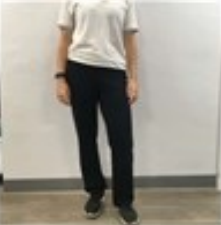
Avoid standing in these position. Stand with your knees straight, with weight equally distributed across both feet.


Avoid sitting in this position. Sit with your knees bent, both feet placed on the floor with weight equally distributed across both feet.
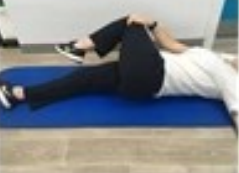
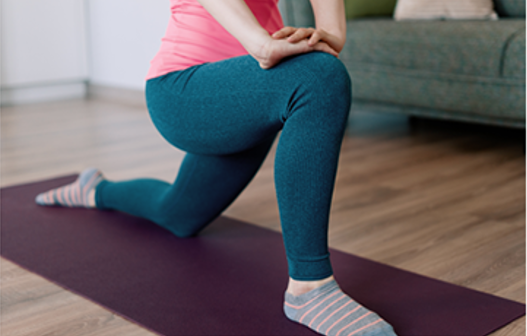
Avoid this hip stretch. Do not perform this or similar hip stretches until your symptoms have fully resolved.
Avoid sleeping in this position. If you prefer to sleep on your side, lie on your symptom-free hip, bend both knees and place a pillow between your knees.
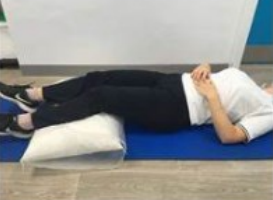
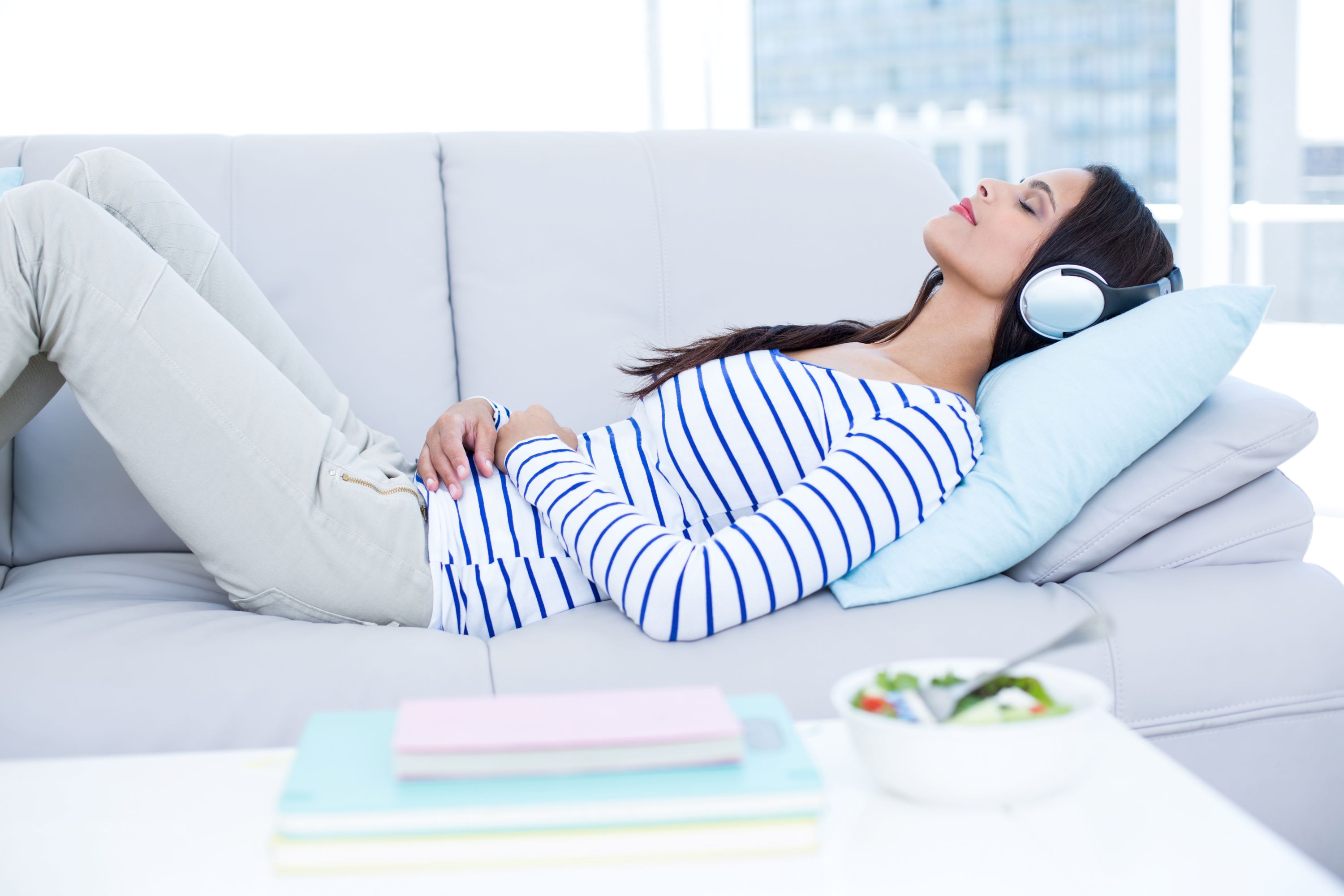
We recommend you try to sleep in this position, on your back with a cushion underneath your knees and calves.
GTPS exercises
Read below for advice and exercises to manage hip pain.This guidance has been produced by the Dynamic Health physiotherapy service. It offers simple measures to help you manage your hip problem safely. Often the right advice and exercises are all you need to improve the problem.
This information has been made available to your GP, who may ask you to try the advice and exercises prior to consulting a physiotherapist.
If your hip pain started suddenly after a recent significant injury, for example, a slip, trip or fall, and you are unable to weight-bear, or if you have a hot, swollen hip with a high temperature and fever, please seek urgent medical advice from A&E, minor injuries or NHS 111.
How much exercise should I do?
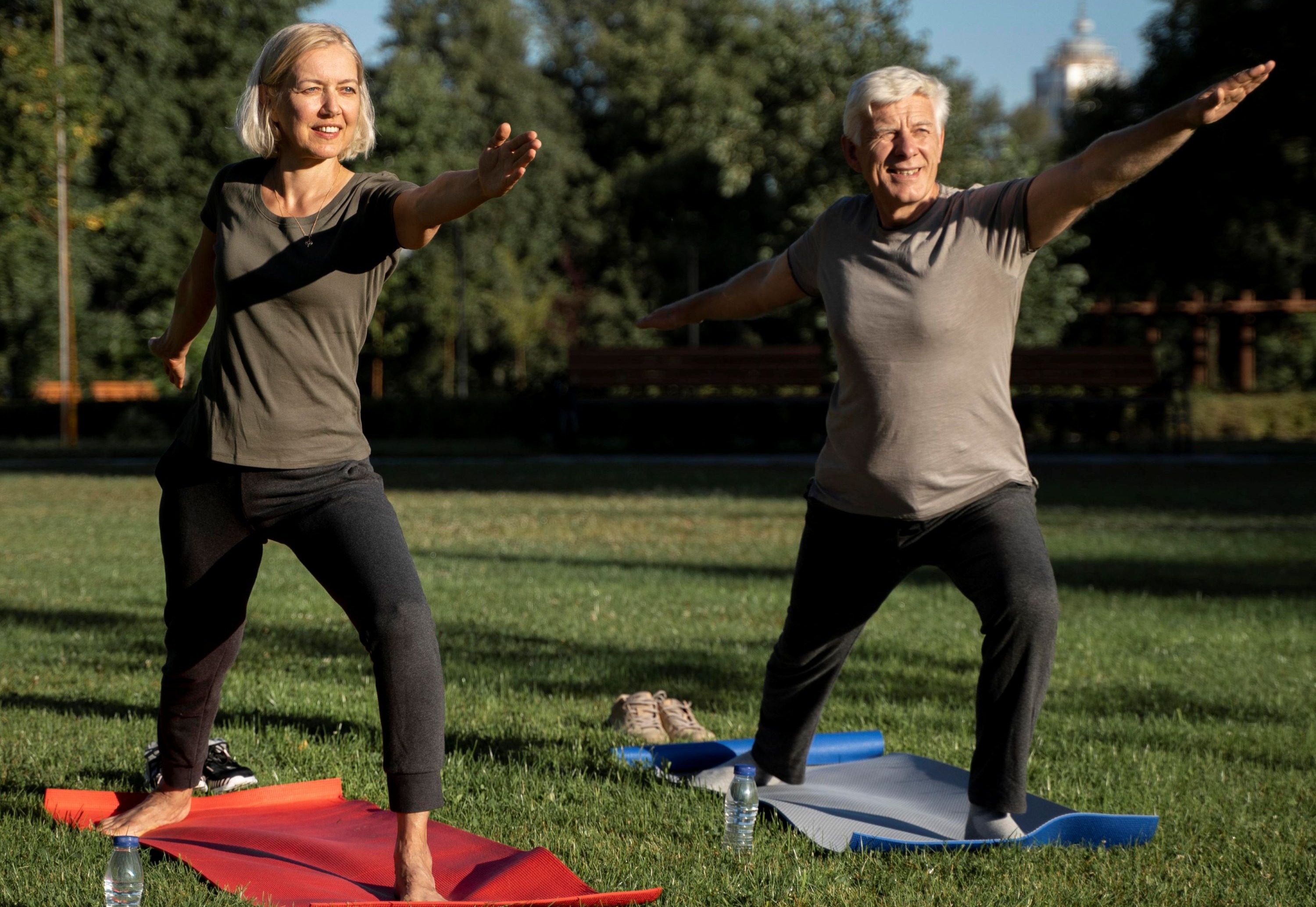
Exercise every other day
Allowing enough rest is important to let soft tissues recover and develop.
Choose 3 or 4 exercises
Choose exercises that are challenging but manageable.
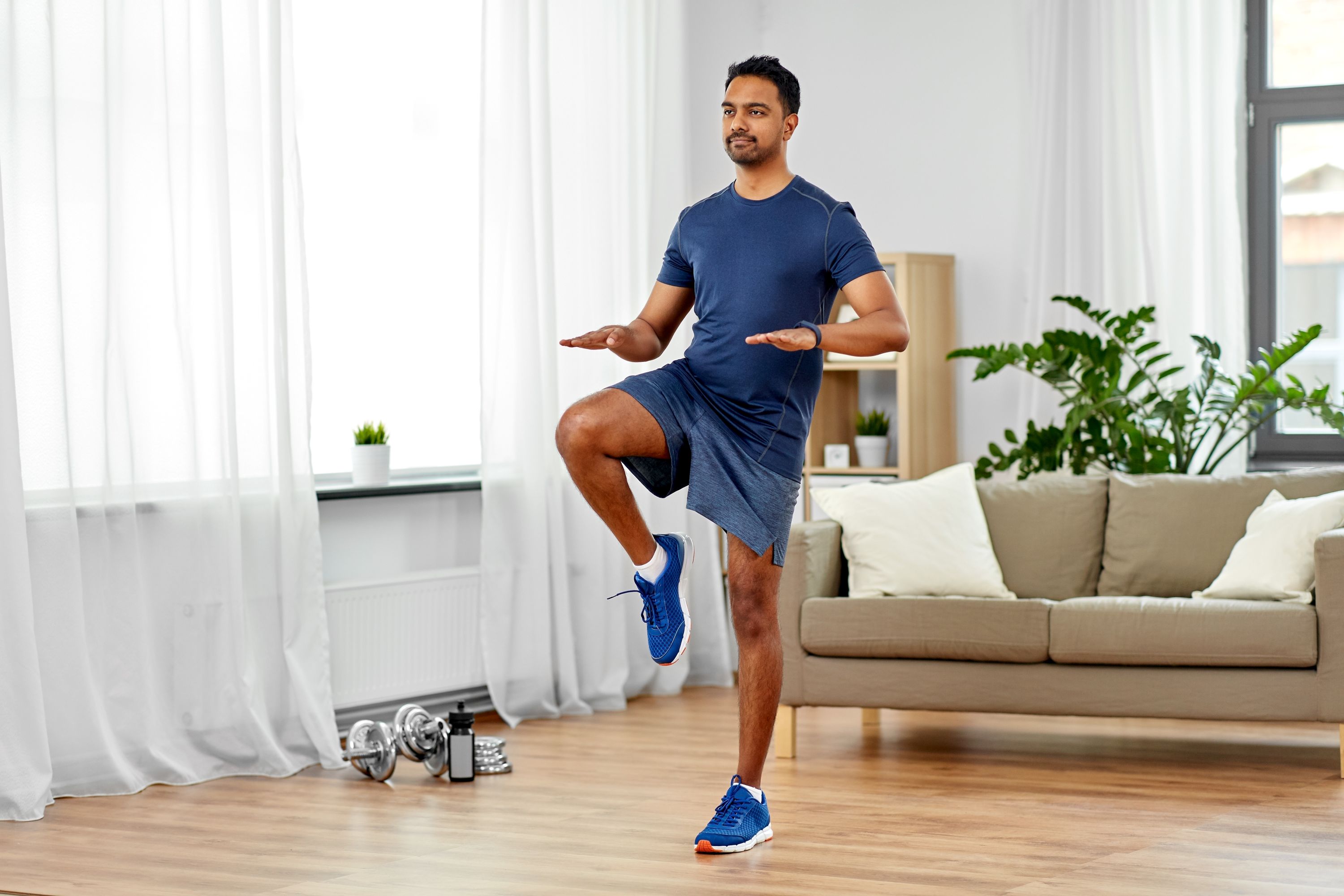
Repeat the exercise
Perform 3 to 5 repetitions of each exercise.
Rest
Rest for up to 1 to 2 minutes between each set.
Once an exercise is easy, progress it
Increase the number of repetitions (you could aim to increase it by 2 to 5 repetitions every 2 weeks). Or hold the positions for longer or move to a more challenging exercise.

How much pain is too much pain?
Read below for advice and exercises to manage hip pain.
Before exercising
Before exercising, rate your pain at the moment on a scale of 0 to 10, where 0 is no pain and 10 is the worst pain you can imagine.
A maximum pain level
A maximum pain level of 4/10 whilst exercising is fine as long as it eases within 45 minutes of the session and does not interfere with sleep or activities the next day.
If your pain increases
If your pain increases beyond this, simplify the exercise by reducing the range of movement or number of repetitions, or try an easier exercise.
Exercises that target the strengthening of these muscles, together with avoiding stretches and provocative postures (in standing, lying or sitting) that place the tendons under compression have proven effective in improving symptoms within 8 to 10 weeks.
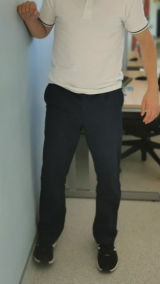
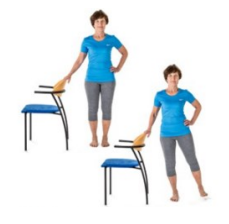
Stand up tall with your back against a wall and hold onto a support as you need to.
Lift your leg sideways, keeping your leg against the wall and leading the movement with your heel.
Then return your leg back to the start position.
Keep your upper body straight throughout the exercise.
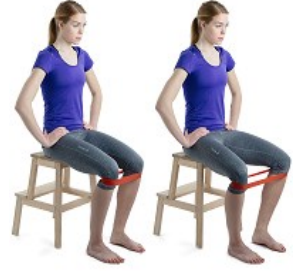
Start by sitting on a bench with feet flat on the floor and a mini band around your legs, close to your knees.
Keep your feet in place and move your knees outwards against the resistance.
Feel the tension in your bottom.
Slightly holding back the movement, bring the knees back to the starting position.
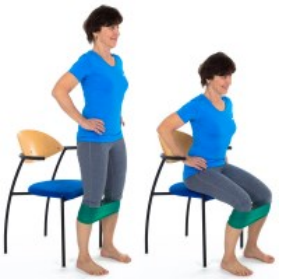
Place the loop of exercise band around your legs, under your knees, and ensure the slack is taken off.
Make sure the chair is at a suitable distance behind you.
Bend your knees and hips and squat down.
At the same time rotate your knees outwards against the resistance.
The knees and toes should point in the same direction.
Lightly sit down and then push back up to the starting position using your front thighs and bottom muscles.
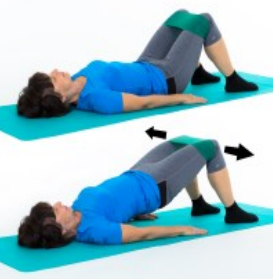
Lie on your back with knees bent and an exercise band loop placed around your thighs near your knees.
Rotate your knees slightly outwards against the resistance.
Squeeze your bottom and roll the pelvis off the floor.
Keep your knees apart.
In a controlled manner, return to the starting position.
Stand up tall with your back against a wall and hold onto a support as you need to.
Lift your leg sideways, keeping your leg against the wall and leading the movement with your heel.
Then bring your leg back to the start position.
Keep your upper body straight throughout the exercise.
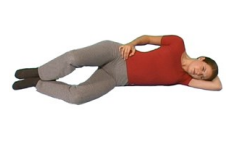
Lie on your side with your knees bent.
Tighten your pelvic floor muscles and gently pull your lower stomach in.
Lift your top knee as far as you can, without letting your pelvis rotate forward or back.
Keep your feet together during the exercise.
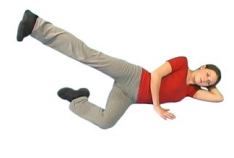
Lying on your side, keep the leg on the bed bent and the upper leg straight.
Lift the upper leg straight up with ankle flexed and the heel leading the movement.
Option a: Hold for 45 seconds.
Option b: Slowly raise and lower leg.
Option c: Add resistance band around thighs to either (a) or (b).
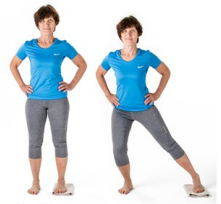
Stand tall with a towel under one foot.
Squat down with one leg and at the same time slide the other leg with the towel sideways.
Pull the leg back next to the other leg and straighten back to the starting position. The sliding leg is your symptomatic hip leg.
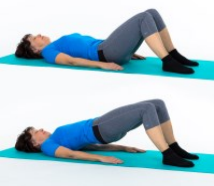
Lie on your back with legs bent and feet on the floor.
Lift your pelvis and lower back (gradually vertebra by vertebra) off the floor.
Hold the position for 5seconds and then lower down slowly returning to starting position.
Once this is no longer challenging, progress to the single leg bridge.
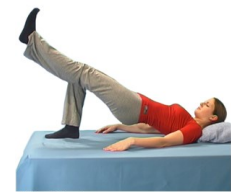
Lying on your back with knees bent.
Lift your hips up and keep them straight while shifting the weight over to one leg.
Then straighten the other leg, put it back down and repeat with the other leg.
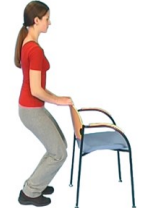
Stand in front of a table or chair holding on to the support with both hands.
Slowly crouch keeping your back straight and heels on the floor.
Stay down for around 20 seconds and feel the stretching in your buttocks and the front of your thighs.
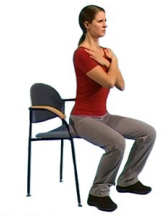
Sit with your hands on your shoulders.
Stand up and then slowly sit down on the chair. The exercise can be made easier or more difficult by changing the height of the chair.
Do not let your knees turn in or out.
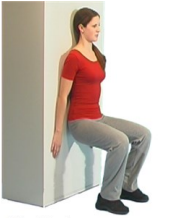
Stand leaning with your back against a wall and your feet about 20 cm from the wall.
Slowly slide down the wall until your hips and knees are at right angles.
Return to starting position.
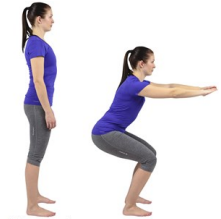
Stand tall with feet slightly wider than hip-width apart. Toes pointing forward or turned a few degrees outwards.
Keep your chest up and your spine and neck in a neutral position.
Squat down by sitting back and bring your arms forward.
Push back up through the heels, chest up, and straighten your hips.
Keep your hips, knees and toes aligned and don't let your lower back round.
Keep your weight evenly on your whole foot.
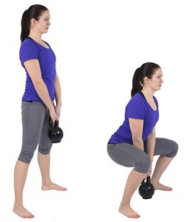
Stand tall with your feet wide apart. Trunk is active and buttocks tightened.
Hold a weight with straight arms in front of your body.
Squat down keeping most of your weight on your heels. Keep your spine in a neutral position and your trunk upright.
Push back to the starting position.
Push your knees outwards, to keep your knees and toes aligned.
Your weight should be evenly distributed between the heels and forefeet.
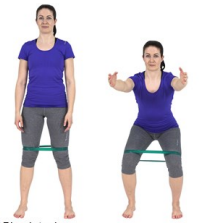
Stand with feet hip-width apart and an exercise band placed around your legs just above or under your knees with the slack taken off the band.
Squat down by moving your pelvis backwards and bending your knees.
Actively push your knees against the band to keep hips, knees and toes aligned.
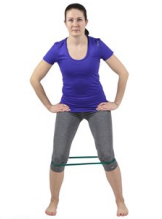
Stand tall, with an exercise or loop band around your legs (slightly above or under the knee joint).
Take a hip-width stance so that the band tightens and squat down. In this position, step to the side then return, keeping the band tight at all times.
Focus on using your buttock muscles.
You can also step forwards and backwards, but remember to keep feet at least hip width apart.
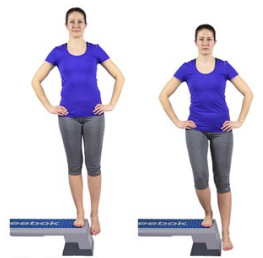
Stand on the edge of a step, with one leg hanging over the edge.
Keeping your pelvis horizontal, bend your knee allowing the foot to brush the floor.
Keep hip, knee and toes aligned. Do not let your pelvis tilt.
Need more help?
Consider self referring using the link below:
If you have a new injury or problem, please look at the self help information in our advice pages. We will often complete the same exercises and share information in clinic appointments.
If you still need some more help you can self refer into our service. Please note that the NHS is currently experiencing longer than normal waits, for more information visit our waiting times page.