


Meniscal knee pain
Understanding meniscal knee pain
Read below for information about meniscal knee pain.
The meniscus is a crescent-shaped cartilage on either side of the knee. It acts as a shock absorber in the knee, between the long bones of the leg. Meniscus pain can be caused by injury or overuse, causing pain, swelling and locking of the knee.
Meniscal knee pain can be common in sports due to twisting/rotational movements of the knee when playing them, accounting for 12 to 14% of knee injuries. However, it is also recognised that the meniscus weakens with age, and degenerative changes are common, accounting for 30% of all meniscal tears.
Research has shown that those older than 40 years old are 4 times more likely to experience meniscal knee pain, and more than 40% of those older than 65 years old will experience pain associated with the meniscus of the knee.
Symptoms of a meniscus injury can include:
- pain
- swelling
- stiffness
- a popping sensation during the injury
- difficulty bending and straightening your knee fully
- a feeling that your knee is locked ‘stuck’ in place when you try to move it
How to manage meniscal knee pain
Initial treatment may include offloading the meniscus through avoiding/resting from any sports or activities, which may be the cause and/or contributing to the cause of the injury.
Initial use of ice to help reduce any swelling and pain for 15 to 20 mins at a time (but not longer than 20 mins) and up to 3 to 4 times a day with at least 30 mins between each time.
Well-structured exercises aiming at increasing the activation and strength, particularly of the quadriceps and gluteal muscles. Exercise can often be challenging and uncomfortable. However, it is advisable that you do not push into pain or experience large increases in pain levels that stay for more than 24 hours after exercise.
Considering the use of orthotics may help to offload stress on the meniscus. Try and avoid deep knee flexion (bending), twisting, and rotating, particularly when weight bearing and kneeling. Try and avoid high-impact activities and excessive forces being put through the knee.
A Magnetic resonance imaging (MRI), can be used to help investigate meniscal knee pain. Research has shown experienced examiners are able to identify patients for surgery with meniscus tears just as well, if not better than an MRI.
Research has shown a lot of changes occur within the meniscus in those without symptoms, which indicates that changes in the meniscus can be a normal phase that the knee passes through. About 19% of over 40 years have meniscus tears that do not cause any problems. It is important to note that meniscus tears occur naturally. This understanding promotes confidence in the examiner's clinical findings when assessing the knee and can help provide the most appropriate treatment pathways to you quicker.
This is not always a straightforward question if your knee is locking, ‘getting stuck’, or you cannot fully extend your knee, then this may be something that is discussed in further detail.
However, research shows that in the absence of your knee locking then when reviewing long-term outcomes of surgery vs conservative management, there is minimal difference and managing conservatively is reported to lower the risk of osteoarthritis later in life. Further to this, there is no strong evidence to demonstrate that surgery is more effective as a treatment than physiotherapy for degenerative meniscal tears.
How much exercise should I do?
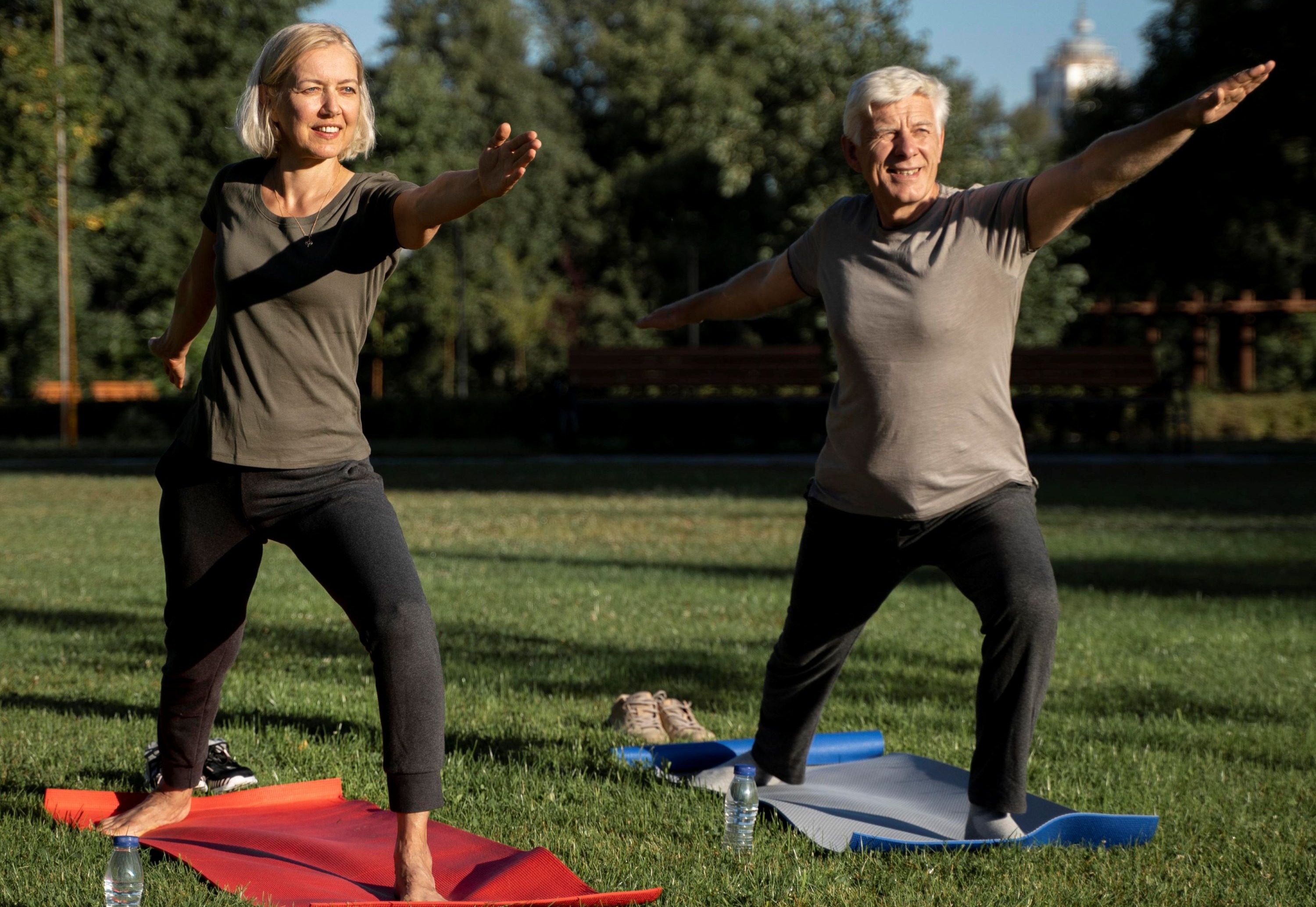
Exercise every other day
Allowing enough rest is important to let soft tissues recover and develop.
Choose 3 or 4 exercises
Choose exercises that are challenging but manageable.
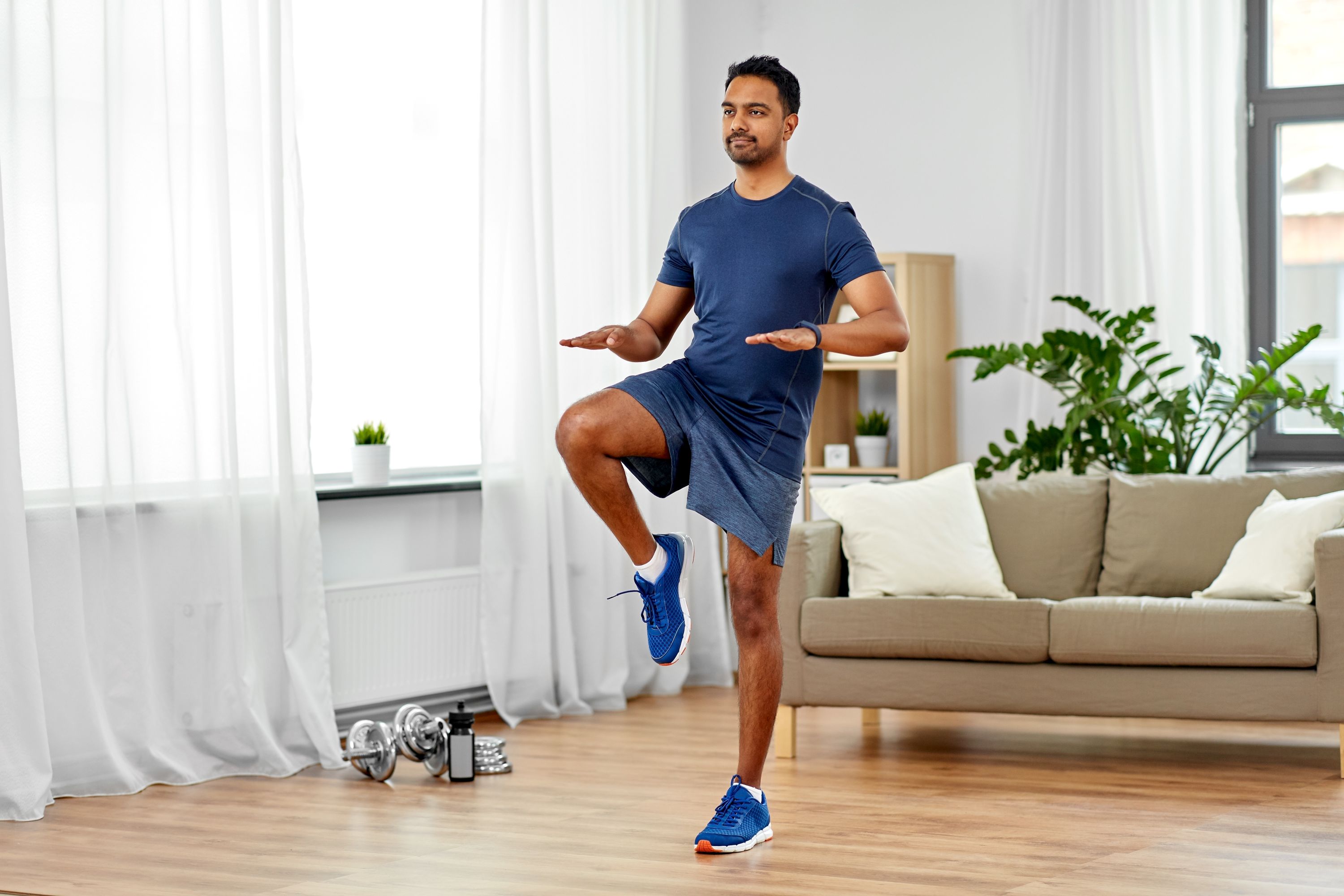
Repeat the exercise
Perform 8-15 repetitions of each exercise, 3 times a day.

Rest
Rest for up to 1 to 2 minutes between each set.
Once an exercise is easy, progress it
Increase the number of repetitions or hold the positions for longer for a more challenging exercise. Try and avoid high-impact activities and excessive forces being put through the knee.

How much pain is too much pain?
Read below for advice and exercises to manage knee pain.
Before exercising
Before exercising, rate your pain at the moment on a scale of 0 to 10, where 0 is no pain and 10 is the worst pain you can imagine.
A maximum pain level
A maximum pain level of 4/10 whilst exercising is fine as long as it eases within 45 minutes of the session and does not interfere with sleep or activities the next day.
If your pain increases
If your pain increases beyond this, simplify the exercise by reducing the range of movement or number of repetitions, or try an easier exercise.
Supportive Exercises
Read the exercise below, which can support meniscal knee pain.
Find exercises to help improve movement and reduce stiffness in the knee. Repeat each exercise 8 to 15 times, 3 times a day for maximum benefit.
Lie on your back with one leg bent and the other leg straight. Place a towel roll under the straight knee.
Bend your ankle and straighten the knee using your front thigh muscles. Keep the back of your knee against the towel roll and keep the tension for a moment, and then relax.
Stand and take support if needed. Squat down and at the same time move your pelvis slightly backwards. Straighten your hips and return to the starting position.
Lie on your back, with knees bent and feet hip-width apart. Draw in your abdominals and tighten your buttocks. Tilt your pelvis backwards and lift your pelvis and back up one vertebrae at a time.
Lift only as high as you can while maintaining the pelvis position. Lower your pelvis down in a controlled manner. Note: Don't let your lower back arch during the lift.
Lie on your side, with the lower leg bent and the upper leg straight. Lift the upper leg straight up with the ankle flexed. Return to the starting position.
Stand tall, with your weight distributed evenly on both feet, and take support if needed. Rise up onto your toes and, in a controlled manner, return to the starting position.
Balance on one leg. Remember to stand tall, with weight evenly on your foot and toes pointing forwards. Aim to hold for 30 secs, but you may need to build up to this.
Stand in front of a step. Push up on one leg. As you push up on one leg bring the other leg through and raise your thigh so that you bring your knee as high as possible. Step back down using the leg which you raised into the air.
Need more help?
Consider self referring using the link below:
If you have a new injury or problem, please look at the self help information in our advice pages. We will often complete the same exercises and share information in clinic appointments.
If you still need some more help you can self refer into our service. Please note that the NHS is currently experiencing longer than normal waits, for more information visit our waiting times page.