

Lower Back Pain
Do you have lower back pain?
Read below for advice on the warning signs of lower back pain.
Back pain is extremely common. It is most common in people between the ages of 35 and 55. ‘Acute’ and ‘persistent ‘are terms used to describe how long the symptoms last. Acute back pain lasts less than 6 weeks. Persistent back pain is pain that lasts more than 6 weeks.
Most people will experience acute episodes of back pain, which settle within a few days to six weeks with simple treatment. Some people will have more persistent pain with ‘good’ and ‘bad’ days. With any back pain it is important to not get into the vicious cycle of reducing movement due to the pain, which in turn weakens the muscles that become vulnerable to further strain.
It is important to attend your GP if:
your back pain came on following a fall or trauma
you have pins and needles, numbness or weakness in your legs
Warning: It is important to attend A&E immediately to prevent any long term damage or disability, if you develop any of the following symptoms:
- Changes to your normal bladder and bowel habits, e.g. unable to control your bowel or bladder or unable to pass urine.
- Numbness in your genital or anal area.
- Recent inability to achieve an erection or ejaculate, or numbness during intercourse.
About back pain
Watch below for information about back pain
Spotlight on back pain
Read these instructions to get the most from our video.
Please watch the introductory video animation about back pain. Select the drop-down arrow in the top left corner of the video to view all the exercises within this video playlist individually.
To benefit most from these exercises, you should:
- aim for 7 to 10 repetitions of each exercise initially
- may need to start with fewer exercises to find a comfortable starting point and gradually build up
- repeat exercises 2 to 3 times a day if possible.
When to seek medical attention
Read below for signs to seek medical attention
It is rare that spinal pain is actually an indication of a more serious underlying medical issue.
However, if your back pain is associated with any of the following, please seek an urgent GP appointment or attend A&E.
Your back pain started suddenly following significant trauma (such as a vehicle accident or fall from a height).
You felt/feel unwell with the spinal pain (such as fever, chills, unexplained weight loss or have had a recent bacterial infection).
You have a medical history of osteoporosis, cancer, HIV, drug abuse, have an immunosuppressive condition or are on long term steroid medication.
If your back pain is progressively getting worse, is not relieved by lying down and is keeping you constantly awake throughout the night, despite trying the advice and exercises for 1 to 2 weeks, or indeed if the exercises are making your pain significantly worse, then please seek further advice from your GP.
Cauda Equina Syndrome
Read information about Cauda Equina Syndrome
Cauda Equina Syndrome is a rare and very serious condition where the nerves at the very bottom of the spinal cord become compressed. If left untreated it can cause permanent damage. It is reported that only one in 10,000 to 20,000 patients with back pain will develop cauda equina syndrome.
However, if you notice any of the following symptoms then you may be suffering from Cauda Equina Syndrome:
- loss of feeling/ pins and needles between your inner thighs or
genitals - numbness in or around your back passage or buttocks
- altered feeling when using toilet paper to wipe yourself
- increasing difficulty when you try to urinate
- increasing difficulty when you try to stop or control your flow of urine
- loss of sensation when you pass urine
- leaking urine or recent need to use pads
- not knowing when your bladder is either full or empty
- inability to stop a bowel movement or leaking
- loss of sensation when you pass a bowel motion
- change in ability to achieve an erection or ejaculate
- loss of sensation in genitals during sexual intercourse
If you have any of the above symptoms you should attend your nearest A&E immediately to prevent any long-term damage or disability.
About the lower back
Read information about the lower back.
The lower back, also referred to as the lumbar spine/region, is where most back pain occurs and includes the five vertebrae (referred to as L1-L5) in the lumbar region, which supports much of the weight of the upper body.
The spaces between the vertebrae are maintained by round, rubbery pads called intervertebral discs that act like shock absorbers throughout the spinal column to cushion the bones as the body moves. Bands of tissue known as ligaments hold the vertebrae in place, and tendons attach the muscles to the spinal column.
Causes of lower back pain
Read about causes of lower back pain
Back pain is very common and usually improves within a 6 to 12 weeks. In most cases, the pain is not caused by anything serious and will get better over time. It's not always possible to identify the cause of back pain. Most back pain is what's known as "non-specific" (there's no obvious cause) or "mechanical" (the pain originates from the joints, bones or soft tissues in and around the spine).
How much exercise should I do?
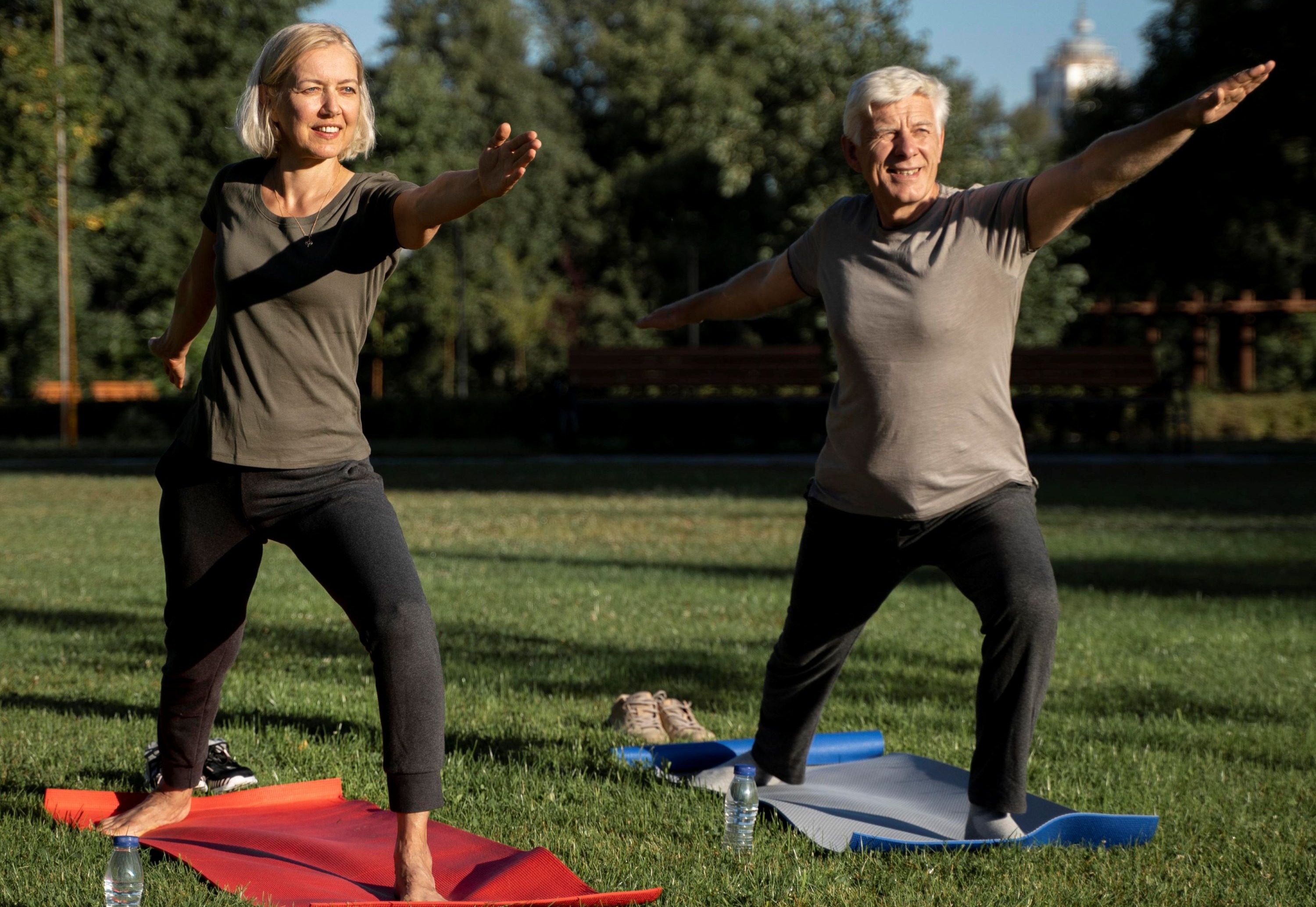
Exercise every other day
Allowing enough rest is important to let soft tissues recover and develop.
Choose 3 or 4 exercises
Choose exercises that are challenging but manageable.
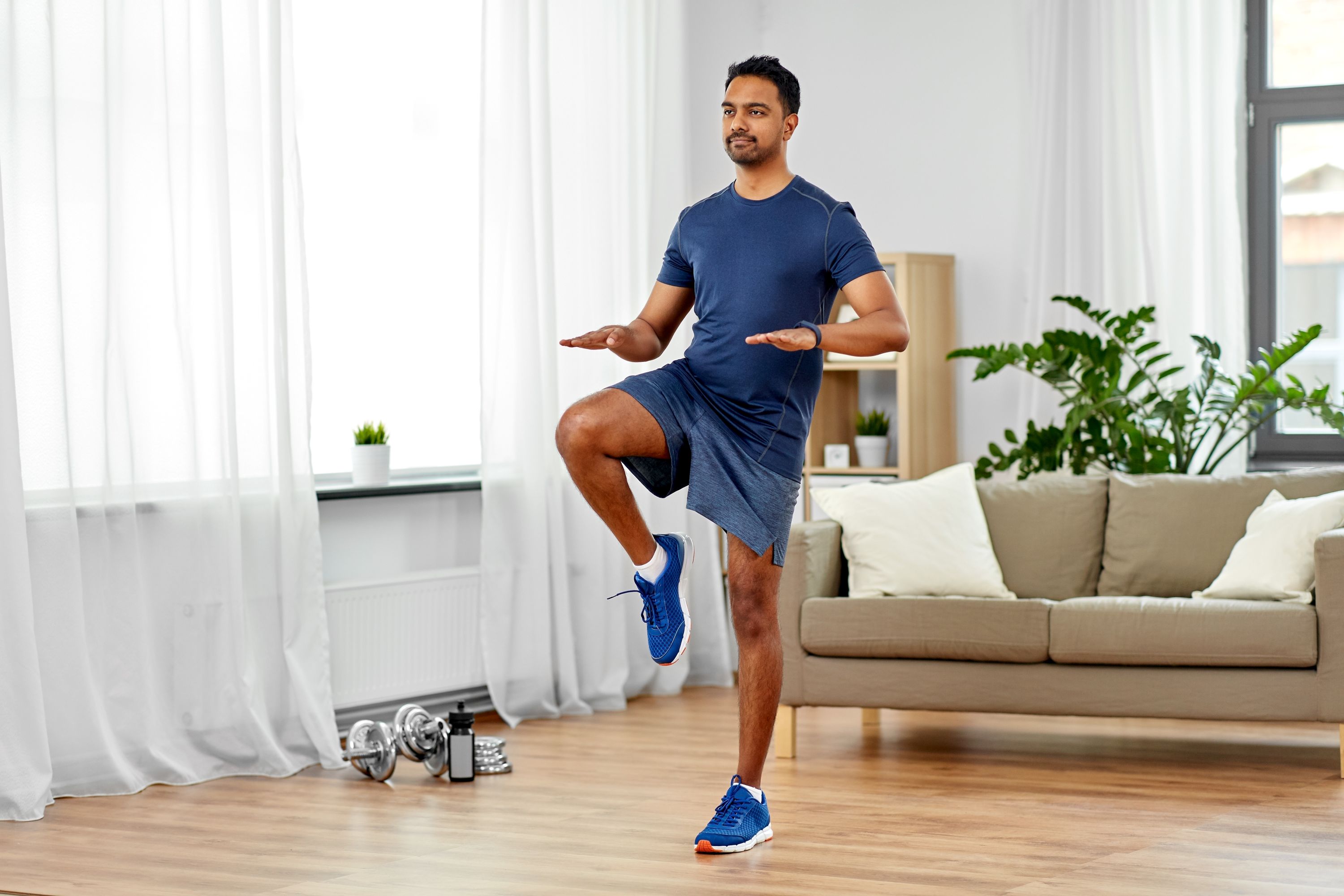
Repeat the exercise
Perform 3 to 5 sets of 5 repetitions for each exercise.

Rest
Rest for up to 1 to 2 minutes between each set.
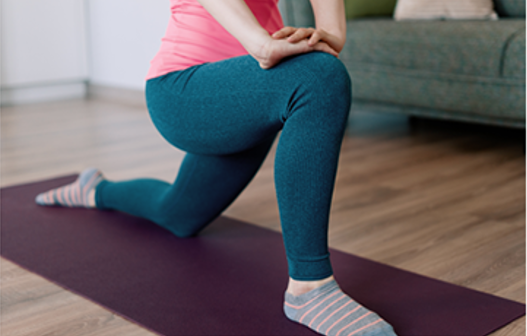
Once an exercise is easy, progress it
Increase the number of repetitions (aim for 10), hold the positions for longer or move to a more challenging exercise.
How much pain is too much pain?
Read below for advice and exercises to manage knee pain.
Before exercising
Before exercising, rate your pain at the moment on a scale of 0-10, where 0 is no pain and 10 is the worst pain you can imagine.
A maximum pain level
A maximum pain level of 4/10 whilst exercising is fine as long as it eases within 45 minutes of the session and does not interfere with sleep or activities the next day.
If your pain increases
If your pain increases beyond this, simplify the exercise by reducing the range of movement or number of repetitions, or try an easier exercise.

Exercises
Read about different exercises for range of movement and strength
Range of movement exercises
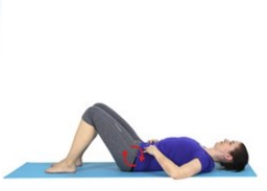
Lie on your back wherever you are most comfortable, this could be your bed. Try to suck in your belly button and clench your buttocks. Imagine you have a tail you are trying to tuck between your legs. Doing this should mean you perform a pelvic tilt. You will find that your lower back flattens to the floor/bed as a result.
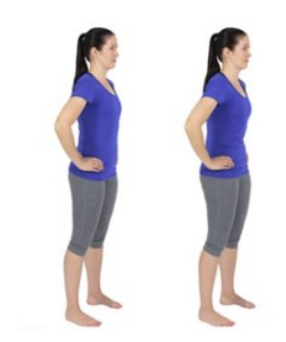
Stand up tall, with your feet hip-width apart and arms supported on your hips. Try to suck in your belly button and clench your buttocks. Imagine you have a tail you are trying to tuck between your legs. Doing this should mean you perform a pelvic tilt.
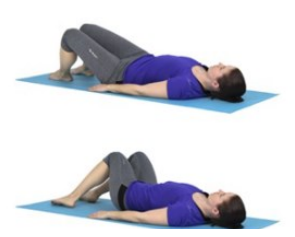
Lie on your back with knees bent, and positioned together. Keep your upper back and shoulders down. Whilst keeping your knees together, gently move them from side to side. Only go as far as you feel comfortable to start, without moving your shoulders.
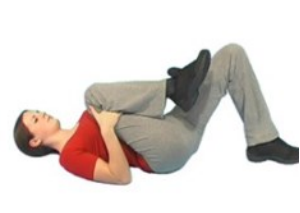
Lay on your back with your hands bent and feet flat. Lay wherever you are most comfortable whether it be your bed or on the floor. Place your hands behind your knee and gently pull your knee towards your chest, only pull as far as you feel comfortable. Hold between 5 to 30 seconds, again as you feel comfortable.
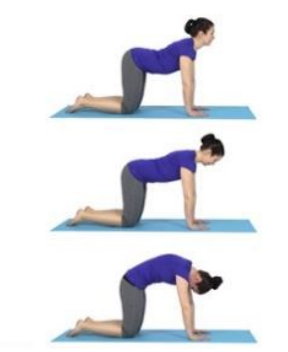
On your hands and knees, hands under your shoulders and knees under your hips. Do this wherever you are most comfortable whether it be on your bed or on the floor. Try to arch and round your back up and down in a slow and controlled manner, by trying to tilt your pelvis backwards and forwards.
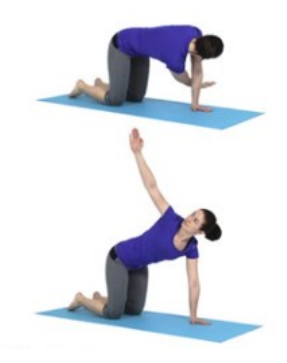
On your hands and knees. Hands under your shoulders and knees under your hips. Do this wherever you are most comfortable whether it be on your bed or on the floor. Reach one arm under the other armpit and reach as far as you can. Then bring the arm back and reach up towards the ceiling.
Strength exercises
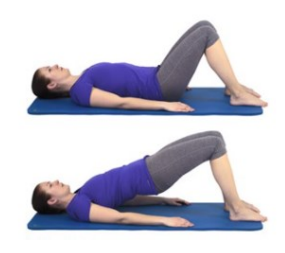
Lie on your back, wherever you are most comfortable whether it be on your bed or on the floor. Bend your knees up, and place them hip-width apart and your feet flat. Suck in your belly button and clench your buttocks, trying to perform and hold the pelvic tilt, which is shown and described in the very first exercise.
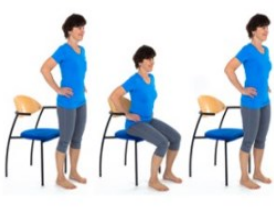
Choose a good steady chair. Sit on the chair with your feet and knees hip-width apart and feet flat on the floor. Aim to keep your knees and feet pointing forwards. Stand up purposefully pushing through your heels, to stand up tall. Sit back down in a steady and controlled manner, leading with your hips. Throughout the exercise try to keep looking forwards.
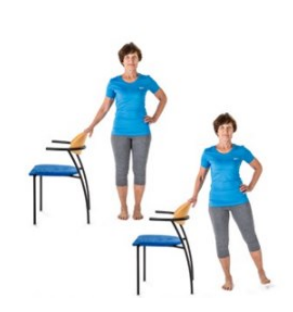
Stand up tall with your back against a wall and hold onto a support as you need to. Lift your leg sideways, keeping your leg against the wall and leading the movement with your heel. Then back to the start position. Keep your upper body straight throughout the exercise.
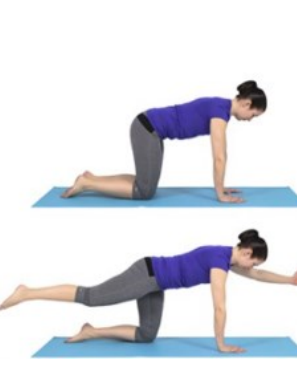
On your hands and knees. Hands under your shoulders and knees under your hips. Do this wherever you are most comfortable whether it be on your bed or on the floor. Suck in your belly button. Lift one arm and the opposite leg in a slow controlled manner. Lift only as high as you can maintain your back position and pelvis level. Bring the arm and leg back down to the floor and repeat on the opposite sides. It may be advisable to try lifting just one arm/leg at a time before you lift your arm and leg at the same time to test your balance and control.
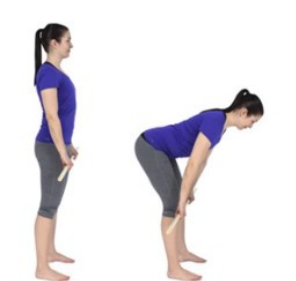
Stand tall with your feet hip-width apart. Hold a stick close to the top of your thighs and hands positioned just wider than shoulder-width apart. With almost straight knees, tilt your upper body forwards and push your hips gently backwards until you feel a stretch in the back of your thighs. Straighten back to the starting position and repeat. Keep your shoulder blades squeezed together to help maintain a straight back and keep the stick close to your legs throughout.
Top tips
Read our top tips for improving lower back pain.
- Keep active and don’t stay in the same position for long periods (i.e. sitting, lying, standing) – research shows that bed rest for more than a couple of days can make the pain worse as it weakens muscles and you become more unfit.
- Exercise regularly and pace yourself — start off slowly and gradually increase. Your back will become stronger and more flexible, reducing pain.
- Take pain relief medication or use creams/gels on the affected area — if you have other medical conditions or are taking other medication, please discuss this with your local pharmacist or GP.
- Apply a heat or ice pack to ease pain and stiffness — ensure you protect your skin to avoid burns or irritation.
- Try to relax as this will reduce muscle tension. Tips on how to do this are provided in this booklet.
- Try and build your exercises into your everyday activities.
- You don’t have to do all the exercises in one go.
- If one particular movement is painful, use this each week to evaluate your progress.
- It is normal for it to take 6 to 12 weeks before you see a good improvement in your pain, movement and strength.
- Don’t stop moving your lower back – muscles need movement to keep them healthy.
- If your sleep is poor, try using a pillow for support i.e. if you like lying on your side, place a pillow under your waist and under your knees. If you like laying on your back, place a pillow under your thighs. If you like laying on your front, place a pillow under the front of your hips/stomach.
- General exercise can really help your recovery so try to keep going with other activities you enjoy to keep fit. Even a brisk walk could really help.
Need more help?
Consider self referring using the link below:
If you have a new injury or problem, please look at the self help information in our advice pages. We will often complete the same exercises and share information in clinic appointments.
If you still need some more help you can self refer into our service. Please note that the NHS is currently experiencing longer than normal waits, for more information visit our waiting times page.