


How much exercise should I do?
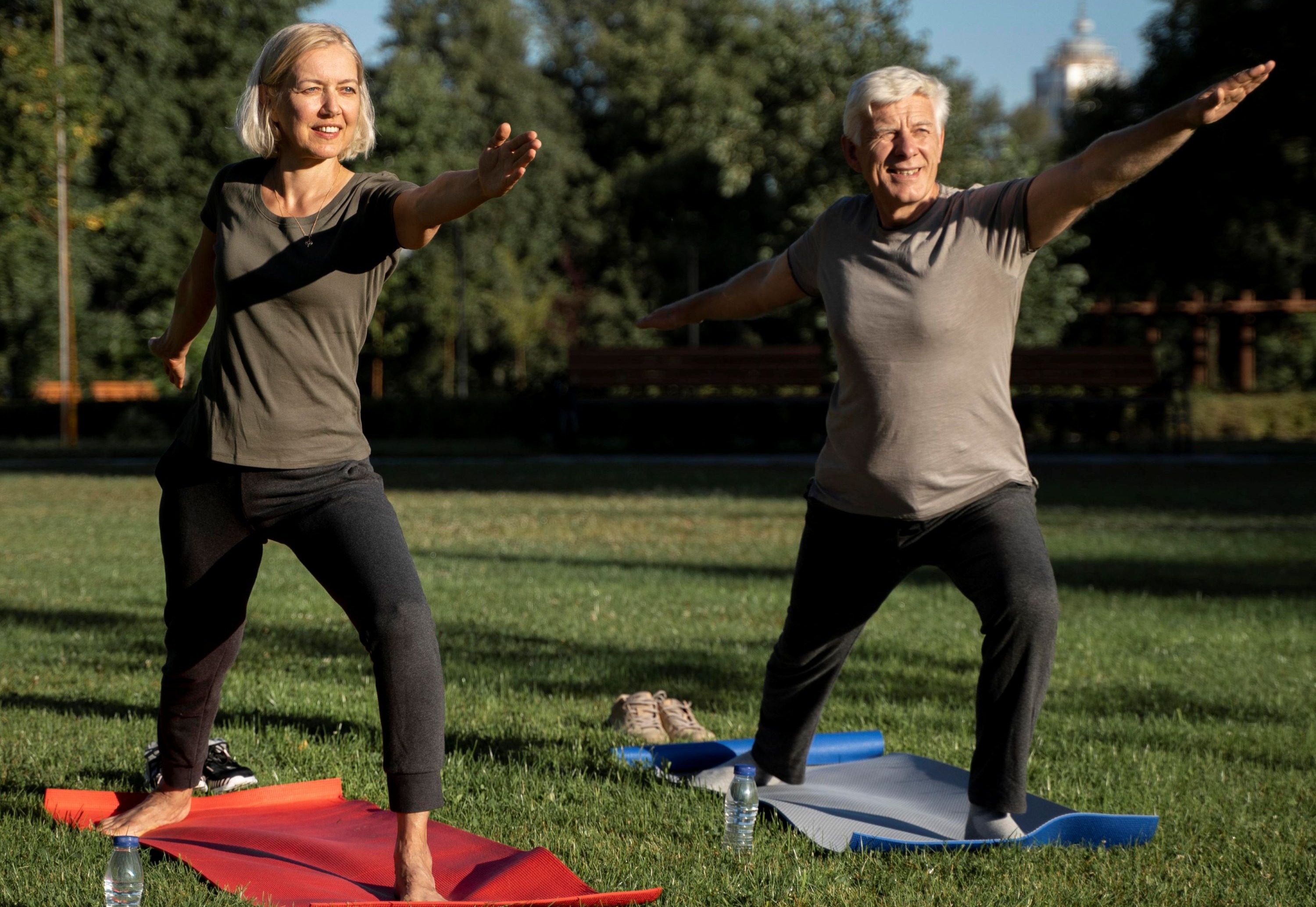
Exercise 2 - 3 times a week
Allowing rest days in between to let soft tissues recover and develop.

Choose 3 or 4 exercises
Choose exercises that are challenging but manageable.
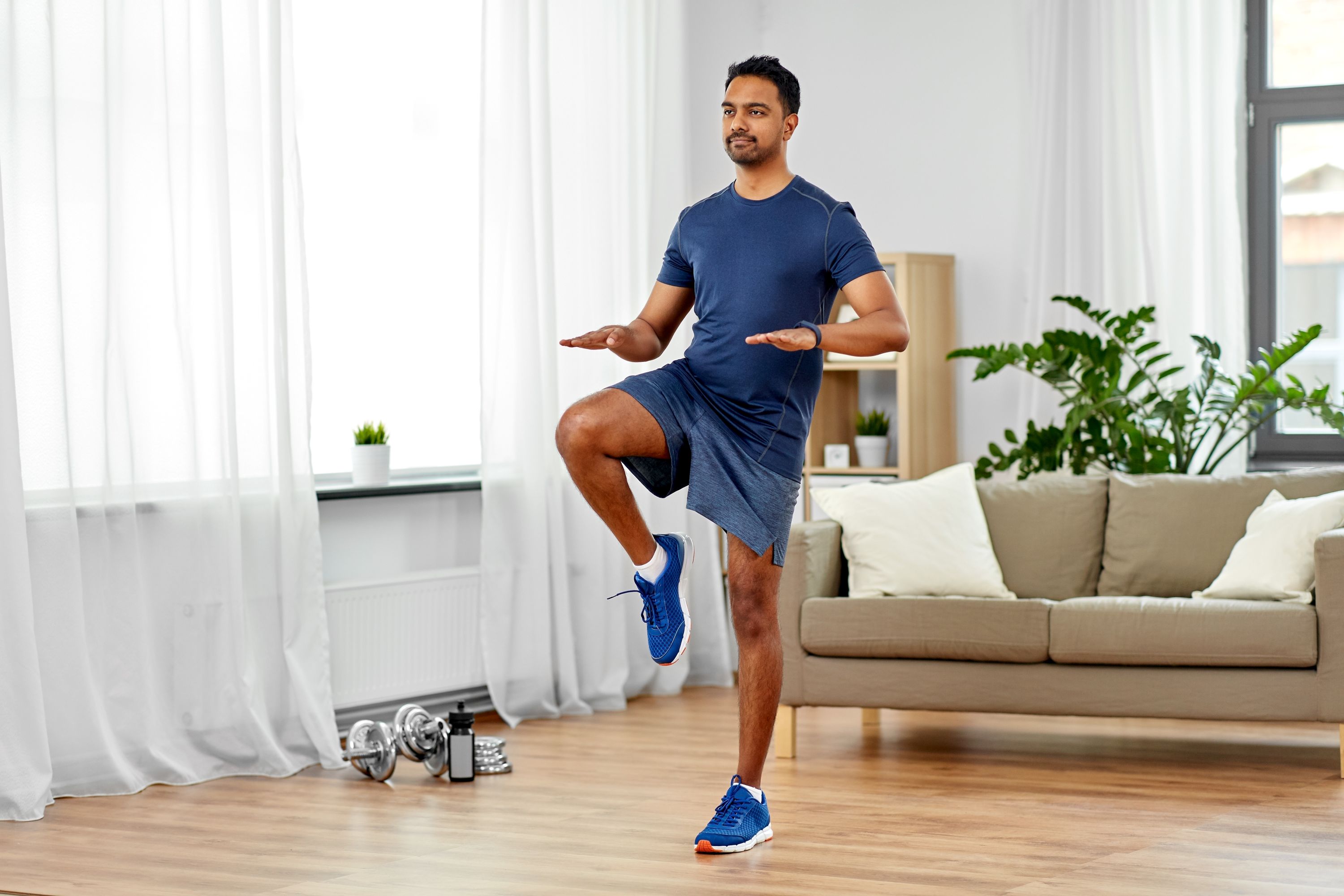
Repeat the exercise
Perform 3 to 5 sets of 5 repetitions for each exercise.

Rest
Rest for up to 1 to 2 minutes between each set and monitor how you are feeling during and after exercising.
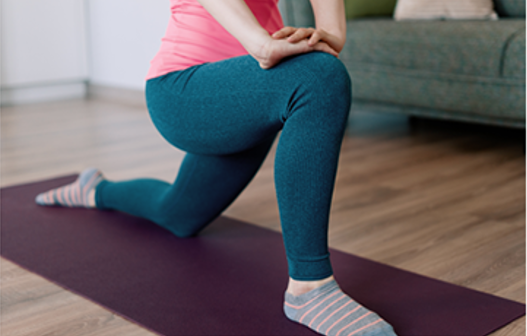
Once an exercise is easy, progress it
If the exercises are feeling easy after a week at this level, try a small increase in difficulty. You can do this by increasing the resistance (tension in band or weight used), depth of the movement, slowing down the return phase of the movement or adding a hold for a few seconds at the end of the movement.

Seated (desk based) exercises
Read about seated (desk-based) exercises to improve mid-back pain symptoms.
Throughout the working day, aim to complete some exercises every 1-2 hours. Perform each exercise until you feel that some of the stiffness has reduced.
 Sitting on a chair, gently straighten your spine. Then push your hands forward and allow your upper back and neck to round.
 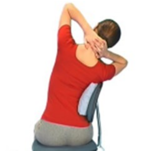 Sit sideways on a chair with a cushion between your side and the back of the chair. Place your hands behind your neck (or cross them over your chest).
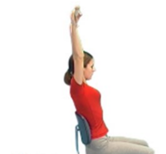 Start sitting on a chair, hold a stick/broom/golf club with a wide grip.
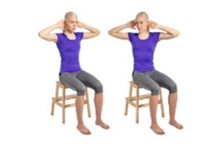 Start sitting on a chair with your legs hip width apart and feet flat on the floor.
 Movement exercises
Read about movement exercises to improve mid-back pain symptoms.
Choose 3 or 4 exercises from the set below that are challenging but manageable. Gradually build your range of movement. Perform each exercise until you feel that some of the stiffness has reduced.
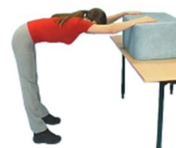 Stand comfortably and lean your trunk forwards with your arms outstretched.
 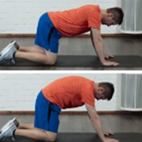 Start on your hands and knees, ensure knees under hips and hands under shoulders. Start with your back in a neutral position.
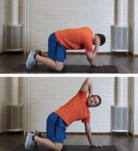 Start on your hands and knees, ensure knees under hips and hands under shoulders. Place one hand behind your head.
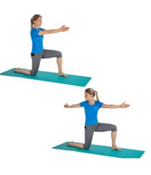 Start next to a wall in a half-kneeling position (use a pillow underneath your knee if required), with your raised leg against the wall. Your foot should be flat on the floor, and your hip bent to 90 degrees.
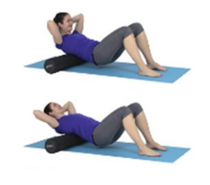 For this exercise you can use a foam roller or roll a few towels together.
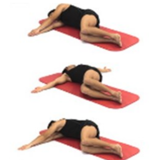 Start side-lying with knees bent. Place both your hands together and extend your arms in front of you.
Strengthening exercises
Read about strengthening exercises to improve mid-back pain symptoms.
Complete these exercises every other day to allow enough rest for the soft tissues to recover and develop.
Choose 3 or 4 exercises from the set below that are challenging but manageable.
Perform 3 to 5 sets of 5 repetitions of each exercise.
Rest for up to 1 to 2 minutes between each set.
Once an exercise is easy, progress it by increasing the number of repetitions (aim for 10) or by holding the position for longer, or moving to a more challenging exercise.
 Start on your knees with your arms outstretched on a gym ball.
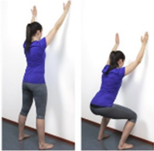 Stand tall, facing a wall. Feet slightly wider than hip-width apart, toes point slightly outward. Arms lifted, elbows straight, and hands against the wall. Squat down, keeping your trunk upright and weight in your heels.
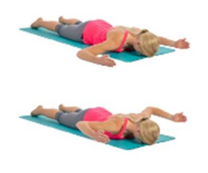 Start lying on your stomach. Take your arms out to the side with your elbows at right angles. Lengthen and align your body through your toes to the top of your head. Maintain with width of your chest and back.
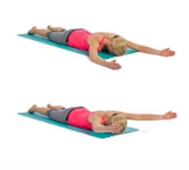 Start lying on your stomach, with your arms diagonally above your head. Lengthen and align your body through your toes to top of your head.
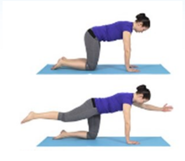 Start kneeling on your hands and knees, ensure your hands are under your shoulders and knees under your hips. Your spine should be in a neutral position. Lift one arm and the opposite leg.
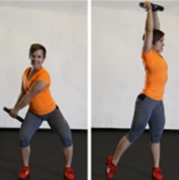 Stand tall and hold a weight plate with hold hands. Squat down, rotate from your trunk and bring the weight plate to one side, next to your thigh.